CloudShield is the first ground-based atmospheric steering system that gently redirects low-altitude cloud cover away from your photovoltaic array — so the sun that was forecast for your roof actually reaches it.
Low-altitude cumulus drift along the path of least resistance through the boundary layer — a thin band of atmosphere shaped by ground temperature, humidity, and static charge. CloudShield doesn't fight the weather. It reshapes the boundary layer immediately above your array so that path of least resistance goes around your panels, not over them.
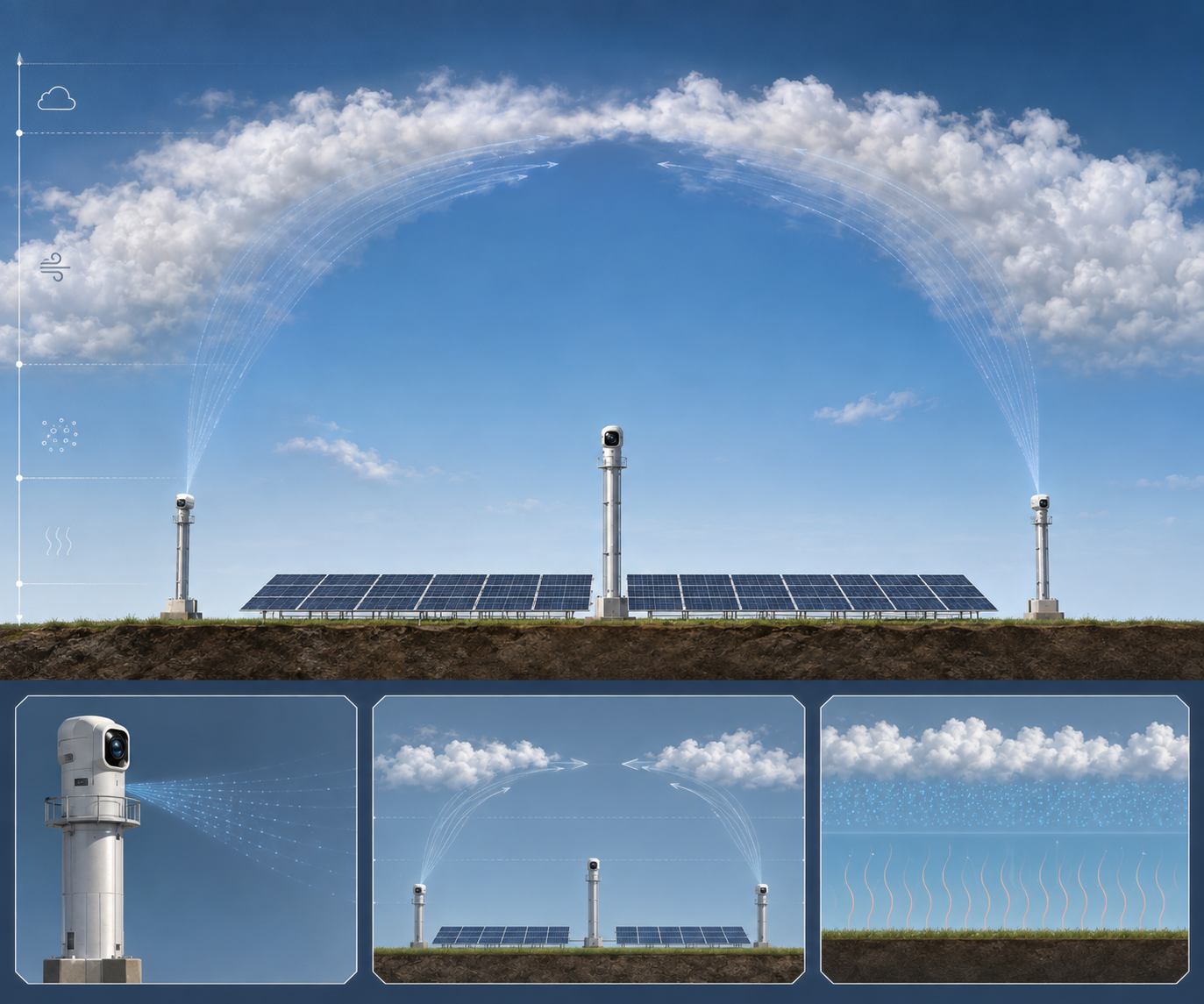
DTBS is the core mechanism. Ground-mounted emitters generate calibrated updraft columns around the perimeter of the protected zone. These columns raise local buoyancy just enough to bend a cloud's descending drift vector outward — the cloud rises and slides around the site instead of settling over it.
A low-power ionization grid reduces the density of condensation nuclei in the air directly above the array. Fewer nuclei means incoming moisture struggles to condense into visible droplet cover here specifically — thinning any cloud that does drift overhead before it can shade a panel.
Paired emitter towers shed counter-rotating micro-vortices at their tips. Where two vortices meet, they cancel — creating a stable low-turbulence corridor directly above the panels while pushing ambient turbulence (and the clouds riding it) to the perimeter.
Halo Radius (Hr)Deflection Efficacy Index (DEI)Buoyancy Differential (ΔB)Nucleation Suppression Factor (NSF)4–12 towers (site-dependent) ring the array, each housing a thermal buoyancy emitter and ionization head.
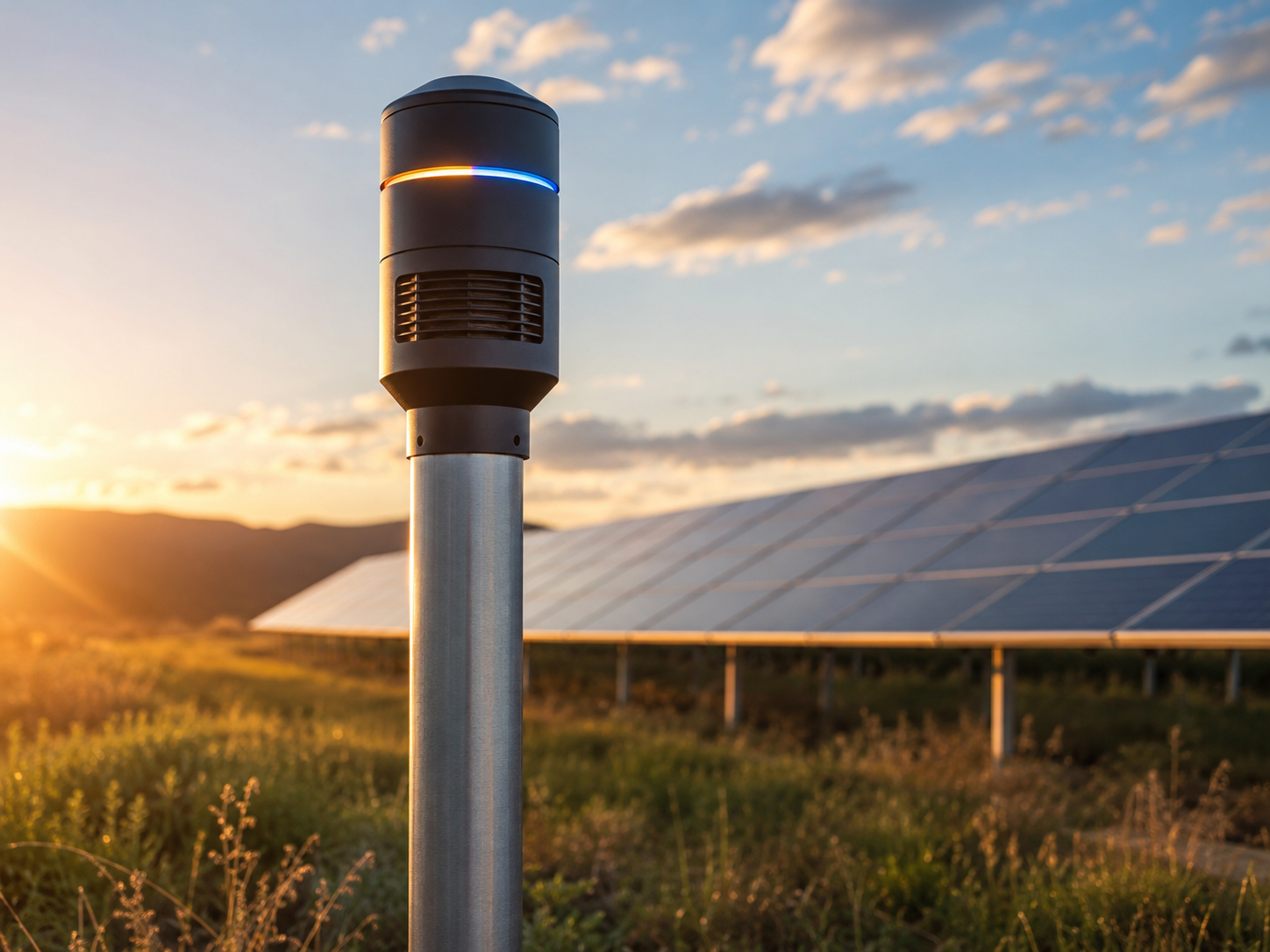
A central mast reads live humidity, static charge, and wind shear 40 m up, fifteen times per second.
Onboard firmware recalculates each emitter's buoyancy and ionization output in real time to hold the halo steady as wind direction shifts.
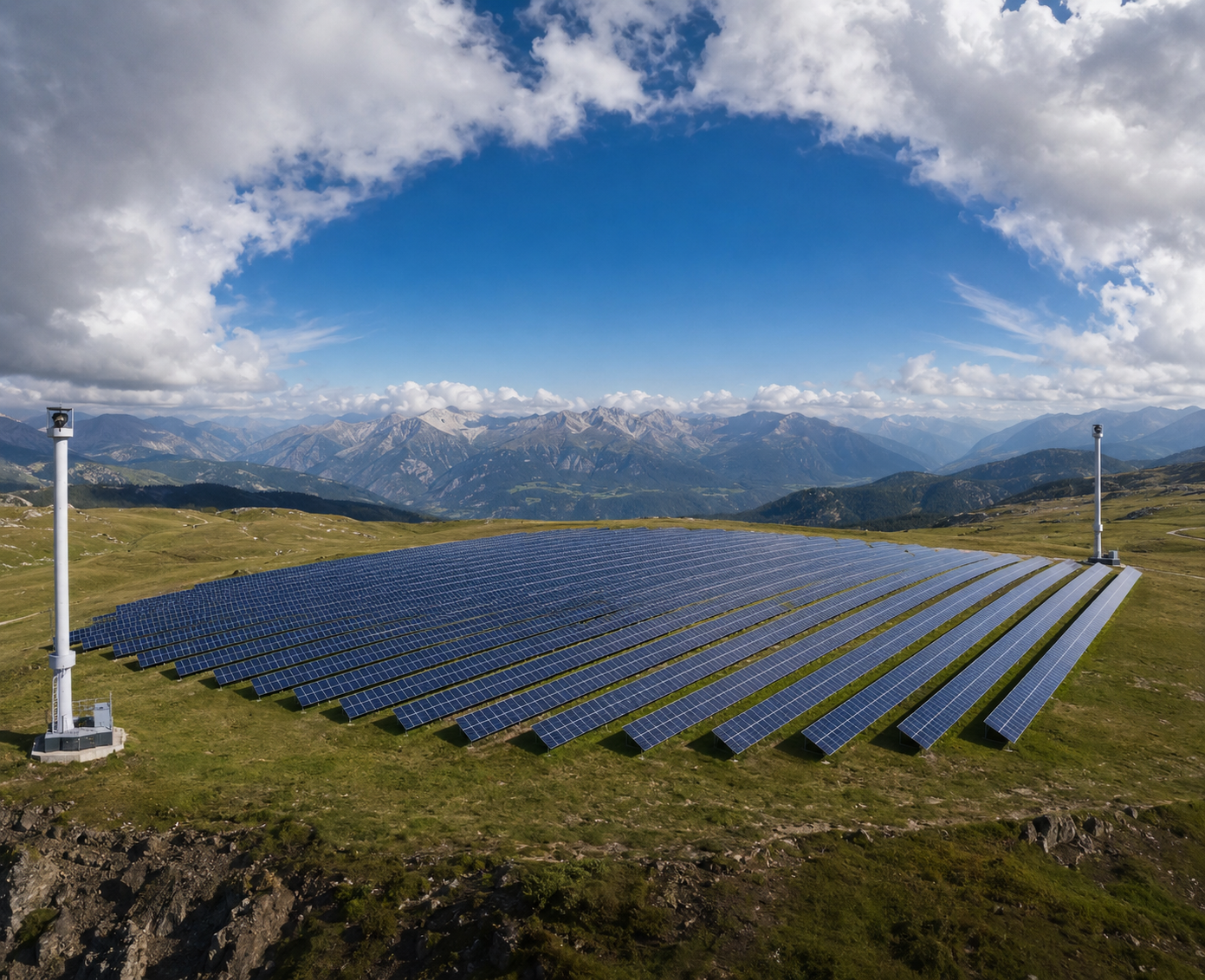
The result: a dome of measurably reduced cloud cover sitting directly over your panels, all day, every day the system is active.
Independent-style monitoring across our 2025 alpine pilot deployments tracked shading-loss minutes against matched unshielded reference arrays within 2 km.
Percentage output gain attributable to reduced shading minutes, Site Alpha (Mühlviertel pilot), 2025.
| Month | Yield uplift |
|---|---|
| January | 22% |
| February | 24% |
| March | 29% |
| April | 33% |
| May | 38% |
| June | 41% |
| July | 46% |
| August | 44% |
| September | 37% |
| October | 30% |
| November | 21% |
| December | 18% |
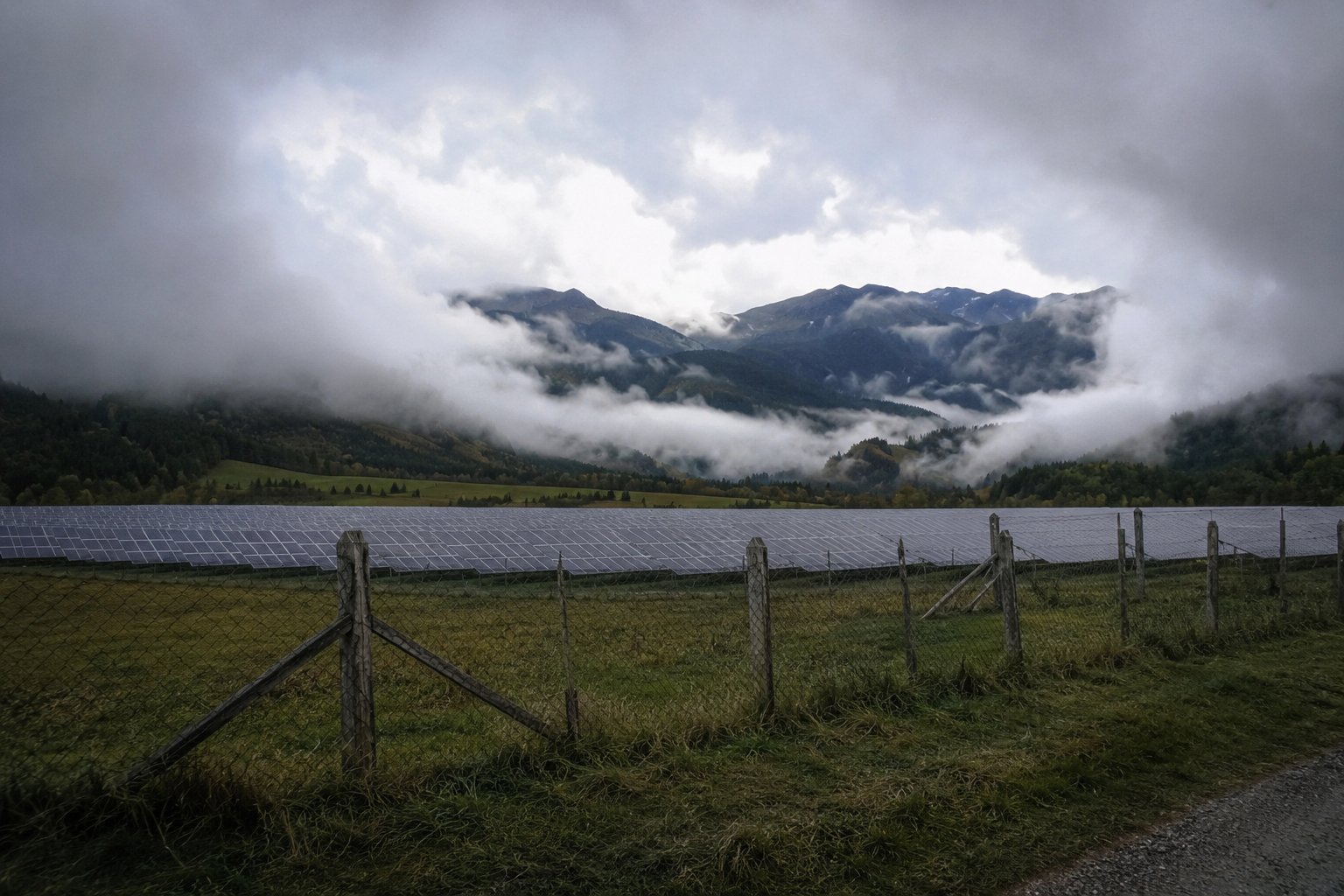
"We used to lose entire mornings to valley fog rolling over the array. Since the AEGIS-9 towers went up, that fog just... goes around us now."
"I was skeptical about a thermal steering system doing anything to actual weather. Twelve months of generation logs later, I'm not skeptical anymore."
"The halo is real. You can stand at the fence line and watch cloud cover visibly bend around the property. Our neighbors keep asking what it is."
CloudShield doesn't dissipate clouds or affect regional precipitation. It locally reshapes the boundary layer directly above your array — a few hundred meters, not a few kilometers — so drifting low cloud tends to route around rather than over your panels.
The Local Nucleation Suppression grid runs well below any occupational exposure threshold and is fully enclosed within each emitter tower housing.
The adaptive steering controller de-rates emitter output above 45 km/h sustained wind and suspends ionization entirely above 70 km/h, resuming automatically once conditions clear.
Emitter towers are foundation-mounted around the array perimeter and wired to the central controller. Typical utility-scale install: 3–5 days, no interruption to existing generation.
We're finishing regulatory groundwork for our first Austrian installations. Join the waitlist and we'll reach out the moment your region opens for pilot slots.
Join the waitlist